


Our people |
 |
|
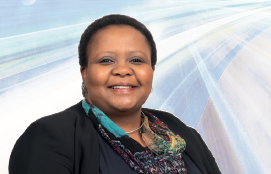
Michele Seroke Chief People Officer |

The impact of COVID-19
Our first priority was to protect our people and stakeholders from infection followed by measures to protect employee salaries and avoid retrenchments as far as reasonably possible.
After reducing capital expenditure and costs related to business activities such as advertising and marketing, as well as salary cuts for all employees earning over R250 000 a year, our measures were not enough to preserve cash reserves and protect the commercial viability of certain of the Group's operations. We have therefore had to implement early retirements, revise employee benefits and embark on voluntary and involuntary retrenchment processes in terms of Section 189 (S189) of the Labour Relations Act to reduce the workforce.
The formal S189 retrenchment consultation processes with labour unions started in May 2020, and the retrenchment process will be completed by the end of September 2020. By mid-September, there were 1 181 voluntary retrenchments, 1 216 compulsory retrenchments and 830 people had left our employ due to resignations and early retirements etc.
We have made an effort to redeploy individuals into other positions within the Group. Going forward, we will address the impact of the reduced workforce on our employment equity, succession and talent management plans for 2021.
Our contingency plans ensure business continuity in the event that our senior leaders and executives within the business are affected by the virus.

Read more in the Chief Executive Officer's review and the remuneration report.

The economic impact of COVID-19 and the interventions used to contain its spread have been widespread. Our inability to trade during the strict lockdown implemented in South Africa, required urgent measures to contain and reduce costs.

People strategy
During the reporting year, the people strategy was updated to address our fast-changing business context driven by digital transformation, and to ensure that our human capital management continues to support the Group's business objective to be a customer-centric and innovative organisation. Our human capital purpose has been redefined to – provide business informed people practices and frameworks that accelerate innovation and organisation growth.
Our human capital imperatives are to:
- Understand, develop and facilitate mobility of critical skills for business and employee growth.
- Foster and leverage a diverse and inclusive work culture to enhance business performance.
- Develop employees and leaders who embody the Motus Way1 to enable an adaptable and future ready organisation.
1 Key behavioural and critical success factors that reflect the Motus strategy, vision and operating model.
The human capital management team received training to enhance their understanding of key accounting concepts, such as profit and revenue, sales and factors that impact essential business metrics. The training has assisted the human resources team to become more aligned to business and will ensure that human resources solutions are better informed by business needs.
Stakeholder engagement
The revised performance development approach drives better engagement between employees and their line managers. Additional engagement has taken place with business leaders and human resources managers on the flexibility and customisation of the system for each business segment. We have also increased the frequency of our engagement with our employees and aligned our messaging across business segments and geographies.
The motor industry successfully signed a wage agreement with the National Union of Metalworkers of South Africa (NUMSA) valid to August 2022. Collective bargaining agreements with NUMSA and the Motor Industry Staff Association (MISA) cover 7 556 employees.
Looking forward
- Test the relevance of the new people strategy following COVID-19, identify and develop the projects to drive the new people strategy and define the key performance indicators to measure progress.
- Manage the impact of COVID-19 on our workforce, addressing the knock-on effect on skill sets, capabilities and morale and ensure transparency, inclusivity and consistency in our processes.
- Review our human capital service offerings and consider new technologies to engage with and develop our people in a new remote working environment.
- Manage the impact of digitisation and automation on people as we accelerate our operations for simpler, faster ways of working.
- Integrate repetitive administrative human capital transactions into a single function to minimise duplication of effort and costs.
Talent management and mobility
The Talent for Growth Framework, established in the reporting year, focuses on strategic talent identification (identifying the critical roles and key skills required today and in the future) and succession planning. The objective of the framework is to future proof our leadership through the effective assessment of talent to identify successors, facilitate internal career growth and address any capability gaps.
Key to attracting and retaining critical skills is being able to move talent between our operations not only as secondment opportunities, which offer an attractive and unique employee value proposition in our sector, but to also unlock organisational value by placing talent where it can make the most impact.
2020 performance
- Started the second pilot of the performance development approach in September 2019, which incorporates the feedback received from the first pilot. The individual performance rating score is split between performance and values-based behaviour with the ratio depending on the unique nature of the business concerned. Guidelines and training are assisting the consistent determination of values-based behaviour.
- Effective career conversations continued despite the impact of COVID-19. Our managers have had to adapt to leading remote teams, taking new approaches to performance conversations, focusing on outcomes and communicating effectively in a virtual environment.
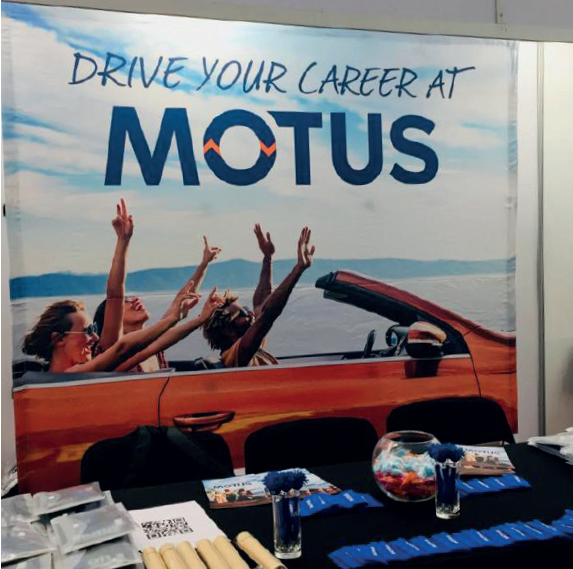
- Participated in three career fairs at the universities of Johannesburg, Witwatersrand and Cape Town to create awareness of the Motus brand as an employer of choice. Over 3 500 students were engaged and 874 curricula vitae sourced, providing a database of young talent from which our businesses can recruit.
 |
Looking forward
|
Diverse and inclusive work culture
We aim to drive an inclusive and collaborative high-performance culture that empowers employees to contribute to business growth, and provides Motus with diverse thinking that drives business results and improves engagement with our diverse customer base. A key focus is providing opportunities for all employees and delivering effective collaboration platforms across multiple workforce segments, providing individuals and teams with the opportunity to share new ideas and contribute to problem-solving.
In South Africa, clear, co-ordinated and targeted interventions are used to source, develop and promote candidates from designated groups to transform our workforce to reflect South Africa's demographics. Executive management recognises that this objective requires an accelerated approach to transformation and has tasked the business segments with pursuing more aggressive internal targets supported by effective plans.
Our diversity training and people policies convey the behaviours we expect of our managers and employees to foster a healthy and inclusive working environment where everyone can perform to their full potential. Our Diversity Training Programme raises awareness on the value of diversity, empowers managers to lead diverse teams and educates employees on how to work in diverse teams.
2020 performance
Black representation (South Africa) 30% at top management level (2019: 31%) 40% at senior management level (2019: 36%) 45% at middle management level (2019: 43%) Black dealer principals 39% of the Group's dealer principals are black (2019: 40%) Women representation (Group) 30% of the Group's workforce are women (2019: 30%) |
Diversity training (South Africa) 233 managers and 1 881 employees attended diversity training (2019: 296 and 1 713 respectively) Differently abled people (South Africa) Of the 146 differently abled people in the South African workforce, 47% are black and 54% are women (2019: 269 differently abled people) Succession Our succession plans earmark senior and middle management positions for black professionals and include the appointment of two black divisional CEOs in the short term. |
- Set ambitious internal employment equity targets to accelerate transformation, particularly at senior and middle management levels. We enhanced the robustness of employment equity reporting to the board to enable a more critical analysis of our progress.
- Developed a disability policy to support the reasonable accommodation of differently abled people and create an inclusive workplace environment. We have also developed a disability awareness campaign to encourage differently abled employees to declare their condition and ask for reasonable accommodation. The launch of the campaign is scheduled for October 2020.
Looking forward
- Provide practices that enable the attitudinal and skills shifts that will accelerate a diverse and inclusive culture.
- Continue to drive robust internal transformation targets and initiatives. We will also engage with business segment CEOs and review our 2023 employment equity targets.
- Review the delivery of diversity training given social distancing requirements.

Leadership and people capabilities
Effective leadership mobilises and inspires teams, engages effectively with stakeholders and steers an organisation through the changes needed to address ever-increasing technologically driven industry advances, and uncertain and challenging times.
The fast, supportive and compassionate decision making in response to COVID-19 is testament to the strength, agility and skill of our leadership team. Within two weeks of the national lockdown announcement, the team had a blueprint in place to take the Group forward when restrictions were lifted. This included business segment management teams working together on ways to capture demand and achieve more attractive price points for customers.
Tailored training and development opportunities are delivered at all employee levels. A focused skills development and training approach enables the Group to achieve its strategic objectives, meet its transformation targets and ensure that a pipeline of skilled people are available for appointment to critical positions when required.
While our training and development programmes were suspended due to COVID-19, we are committed to maintaining our investment in skills development, with a particular focus on expanding and repeating our learnerships for differently abled people.
2020 performance
Training spend (South Africa) R177 million equating to 4% of payroll (2019: R137 million) Training hours (South Africa) 63 hours per employee (2019: 78) Management training (South Africa)1 211 employees participated in a managerial programme - 70% of participants are black and 25% are women (2019: 654) Technical training (South Africa) Technical training accounted for 84% of total training spend (2019: 82%) |
Motus Technical Academy (South Africa) 795 apprentices trained by the Academy were paid by Motus, 86% are black (2019: 686) 95 qualified apprentices were hired and are part of the feeder pipeline for critical workshop positions (2019: 93)
|
1 The 68% decrease is due to the impact of COVID-19 on face-to-face training.
Looking forward
- Identify the key behavioural and critical success factors that reflect the Motus strategy, vision and operating model (the Motus Way) and develop training programmes to help leaders and employees live these behaviours.
- Continue to facilitate accelerated development programmes for identified succession pools and deliver programmes that help employees become digitally astute.
- Ramp up our efforts to deliver mobile digital learning platforms to enable greater remote access to training material and programmes and reduce learning management costs.
A safe and healthy operating environment
The health and safety of our employees, customers and partners is always top of mind, which during the year extended to ensuring that we prevent and minimise the potential spread of COVID-19. As a business that relies heavily on people, the morale of our employees has a direct impact on our success in meeting our strategic objectives and customer expectations. This was particularly evident during the pandemic where we relied on the resilience of our people to ensure the successful continuity of our day-to-day business processes and the upkeep of our customer service standards under challenging circumstances.
We are saddened to report a fatal accident at one of our parts distribution centres (PDCs) in South Africa on 15 November 2019, where the employee concerned unfortunately did not follow the required safety protocols. A full independent investigation was undertaken and despite a robust and compliant occupational health and safety (OHS) system, the incident reinforced the need for continuous vigilance in enforcing a health and safety culture. The following areas have therefore been prioritised:
- A review of external OHS service providers and consultants aligned to the risks being assured.
- A benchmarking exercise to identify the risks per site to enable customised checklists and assurance suitable for each operation.
- Increased employee training and awareness.
- Increased engagement with CEOs and Managing Directors of all businesses, reinforcing their accountability for OHS performance.
Our employees have had to contend with the impact of COVID-19 on their personal lives and at work where new ways of working were quickly implemented, as well as the uncertainty brought about by the Group's organisational restructures. These changes have added to the stress and financial pressures already felt by many South Africans in a difficult economic environment. Our employee wellness services, available across the Group, continued to be accessible, and in South Africa, usage of these support structures increased during the year.

Protecting our stakeholders during COVID-19
The need for limited physical contact during COVID-19 presents a fundamental shift in our operating model, necessitating the increased dependence on digital strategies and the redesign of a number of key interaction points with customers, our people and other stakeholders.
Health and safety procedures have been implemented across the Group to respond to the pandemic, and are continually modified and enhanced as developments and expectations from governments and health authorities' progress. A COVID-19 crisis committee, led by the Group CEO, is tasked with providing leadership during this uncertain time, including monitoring guidance from health authorities, and in turn, making decisions quickly to implement the necessary controls across the Group. The committee also oversaw the updating of business continuity and resumption plans for each business segment, by business site and covering people, technology and customer management.
New policies and procedures
Employees who are able to work from home have been set up with remote capability. Safe working environments are provided for employees who are critical to our customer relationships and needed on-site for critical business functions. All employees must wear masks and business sites and offices are sanitised and social distancing procedures are enforced.
To ensure the Group's requirements were consistently met across all operations in South Africa, we leveraged our supplier relationships to procure and distribute 22 500 cloth masks, 34 700 disposable masks, 10 000 face shields, 580 thermometers and thousands of litres of sanitiser. Personal protective equipment was also distributed to our employees in other parts of Africa. Our operations beyond South Africa implemented the measures required by their governments and health authorities. In the UK, this includes conducting full site risk assessments.
At the end of August 2020, five of our 17 499 employees had sadly succumbed to the virus and 538 (523 in South Africa, three in Malawi and 12 in the UK) had tested positive. Our procedures have ensured that the affected operations continued to meet required service levels safely.
Regular messages from the Group CEO, clear COVID-19 guidelines and procedures, and information delivered through multiple channels, have kept employees updated on developments within the Group and well informed on new ways of working and how to prevent infection. Guidance was also provided on the management of sick leave during the pandemic, on working from home and travelling to and from work and employee assistance programmes. Feedback indicates that our people have appreciated this increased level of engagement. Listening to and empowering our people is just as important and some good ideas have been generated on how to manage challenges raised by the pandemic.
We have also increased our engagement with our customers and suppliers on safety measures, and we are enhancing our ability to engage remotely with our customers, including through online platforms and apps. In addition, vehicles are collected and delivered to and from a customer's home or workplace, where feasible. Changes have also been made to the way we conduct customer test drives, including the sanitisation of all touch points in the vehicle once a test drive is completed.
Our executives remain committed to preventing the spread of COVID-19 and implementing the necessary procedures to ensure that when a possible infection is detected, we are able to respond quickly and effectively.

2020 performance
Motus Group Of our 567 sites, including five in East Africa and 30 in Australia, we achieved an 83,6% audit coverage with an average score of 90%. |
||
|
South African business sites 88%1 of our business sites were audited, with 91% achieving the OHS compliance target scoe in excess of 85%. (2019: 88%) UK business sites 81%1 of our business sites achieved an OHS audit score in excess of 90% (2019: 93%) |
Motus UK 17% reduction in on-site accidents and injuries 100% reduction in road accidents and injuries Road accidents 21 road accidents (2019: 35) |
|
Our OHS framework proved resilient during COVID-19, with all business segments successfully implementing the appropriate health and safety procedures. |
||
1 Not all sites audited due to COVID-19 restrictions and social distancing requirements.
Note: OHS metrics cover employees and third-parties.
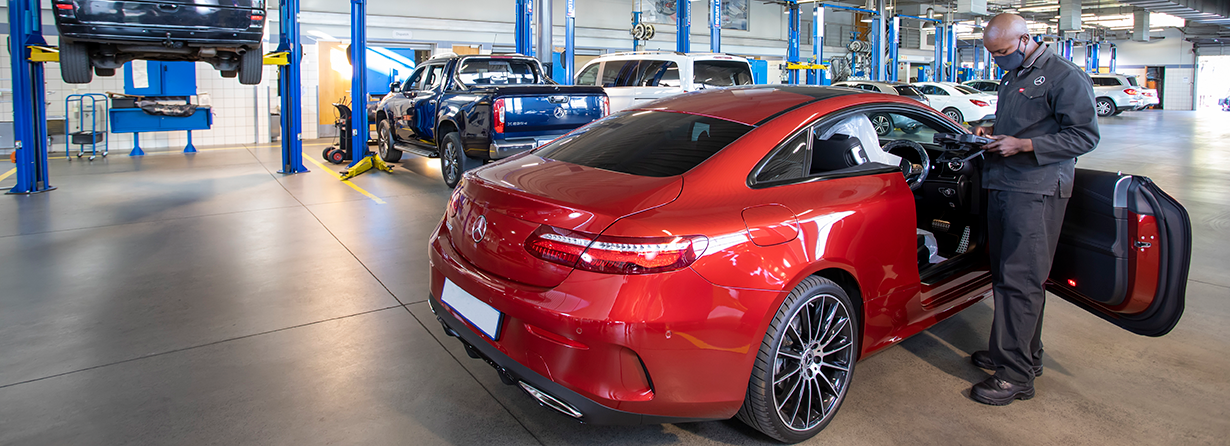
- Implemented the necessary changes to adhere to COVID-19 regulations and directives for the automotive industry in all countries of operation. Teams are split into alternating shifts, where possible, to limit the risk of COVID-19 transmission and business interruption in the event of a positive test result.
- Reviewed the health and safety standards and practices applied across South Africa to determine the level of consistency. We have also started to benchmark our external OHS audit service providers, with the exercise already underway in our PDCs.
- Continued to deliver OHS training and awareness to help employees meet their OHS responsibilities and adhere to legislative requirements as well as ensure that equipment is operated safely and hazards are managed responsibly.
- Prior to COVID-19, certain businesses held wellness days, giving employees the opportunity to gain information on how to manage their health and wellbeing. Wellness days were held by Hyundai, Kia and Financial Services. Emerging Brands organised lift clubs for its employees who use public transport, minimising their exposure to COVID-19, and it increased its efforts to raise health and safety awareness. Car Rental launched an online health and safety awareness training video.
- The number of sites in the UK that met the minimum pass score dropped from 93% in 2019 to 81% mainly due to acquisitions in Motus UK's Commercials division, where we have now implemented our standards. We require all acquisitions to adopt our minimum standards, and action plans are in place to align the acquisition's health and safety practices to our required standard. The number of on-site accidents and injuries in the UK dropped 17% to 193, however, fewer people were working on-site during the months of April, May and June 2020 due to COVID-19, contributing to the decrease.
- Motus Australia provided its managers with guidance and training on wellness and tasked them with regularly engaging with employees working from home to ensure that issues such as increasing stress levels, demotivation and resentment, cabin fever, burnout and unhealthy home workspaces are identified and employees receive the appropriate assistance.
Looking forward
- Based on the results of our benchmarking exercise, ensure we maintain a smaller group of preferred OHS service providers in South Africa, capable of meeting our required OHS standards and training requirements.
- Continue to monitor and review the quality and practical fit of OHS training provided in South Africa and improve the OHS audit process, liaising with internal audit and performing random quality assurance checks in high-risk areas.
- Ensure that acquisitions and new sites align to our minimum OHS standards and monitor ongoing enhancements and improvements.
- Implement any new OHS requirements that may be brought about by COVID-19 and leverage the existing COVID-19 site work plans to optimise OHS strategies.
|
For detailed information, read our sustainable development reporting online. Be an employer of choice in the automotive industry and Provide a safe and healthy operating environment for our stakeholders. |