Our response to COVID-19

Short-term impact

Our fully integrated business model has enabled agile responses to the impact of COVID-19, which continues to be felt globally and in every country in which Motus operates.

We experienced a significant decline in demand for our products and services as a consequence of national lockdowns, during which time our operations were either closed or experienced significantly reduced activity levels. Delays in the reopening of certain public services, especially in South Africa, further impacted activity.

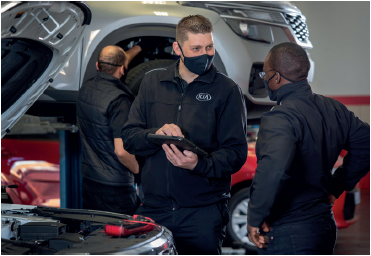
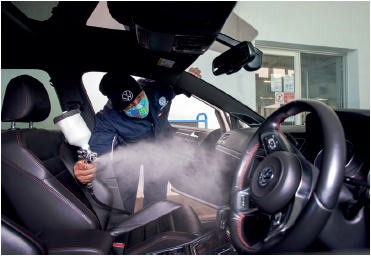
Motus has a Crisis Committee in place, headed up by the Group Chief Executive Officer (CEO), which continues to monitor the latest guidance from the health authorities and provides regular updates to the board, management and staff. The Crisis Committee is monitoring and assessing the situation closely and has implemented protocols across all our businesses, to prevent and minimise potential infections and transmissions of the virus, and keep our people, customers and suppliers safe.

COVID-19 timeline

Normal operating conditions for nine months of the 2020 financial year


Voluntary announcement relating to the impact of COVID-19 on the business
(20 March)

Announced the cancellation of interim cash dividend payment
(24 March)

Discussions with funders initiated to preserve cash and retain access to funding
(21 April)

Voluntary nine-month trading update to investors
(23 April)

Approval by funders for relaxation of covenants

Investor briefing, trading update and statement
(19 June)


Commenced ongoing communications with our people, OEMs and government authorities (20 March)

 
UK lockdown commences
  • sales showrooms close
  • commercial vehicle workshops remain operational

(23 March)

    UK opens 100% of operations
(1 June)
 
South African government lockdown restrictions commence – all non-essential operations closed
(27 March)
 

Government gazetted phased in opening of 30% South African operations commence
(12 May)

Motus begins to implement staggered openings across dealerships stores, head offices and distribution centres

Government gazetted 60% of the South African workforce returns
(25 May)

Vehicle licensing and registration offices begin opening
(10 June)

Government gazetted operations fully open
(8 June)

 
Australia implements restrictions, remaining open but at reduced operating levels
(27 March)
 

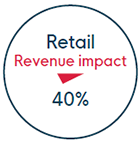
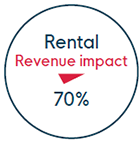
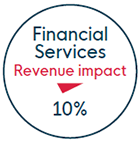
The percentages below reflect the last quarter's year-on-year decline, extracted from unaudited and unpublished management accounts.


COVID-19 impacted all of our businesses to varying degrees

  • South African new vehicle sales slumped by 98% in April 2020 and 68% in May 2020 year-on-year.
  • Projected calendar year contraction of over 30% for 2020.

Our response

  • Engaged with OEMs for financial support and reduced targets to earn variable margins.
  • Secured uninterrupted inventory supply.
  • Existing footprint, digital platforms and positive staff behaviour provided agility.
  • Refocused advertising strategy to adjust to customer behaviour patterns.
  • De-fleet of rental vehicles to supply growing pre-owned vehicle market.

Outlook

  • Readiness of our people, vehicle and parts availability will assist to drive increased market share.
  • Diverse offering of entry-level vehicles and small SUVs across broad OEM representation.
  • Large offering of pre-owned vehicles supported by national footprint.
  • Favourable foreign currency cover to support competitive pricing.
  • Multi-franchise opportunities to optimise dealership footprint.

  • Significant car rental market contraction.

Our response

  • Reduced car rental fleet by 35% (7 000 vehicles).
  • Rightsized operations by closing 19 outlets and reducing the rental workforce by 45%.
  • Rental vehicle de-fleet through 71 Auto Pedigree dealerships with a broad range of brands.

Outlook

  • Leverage insurance replacement market.
  • Continue to invest in technology to improve customer experience.

  • Protected by annuity income streams in the medium-term.
  • Reduced income from financial institution joint ventures.

Our response

  • Extended service intervals under service and maintenance plans to support customers during lockdown.
  • Accelerated innovation to unlock new revenue streams.

Outlook

  • Annuity income streams and cash generation continue to underpin earnings.
  • Investment in technology enables us to offer personalised services to:
    • enhance the customer experience; and
    • improve customer retention.

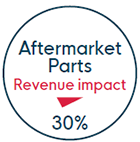
  • Reduced demand for accessories and parts.
  • Down-trading from premium products to more affordable alternatives.

Our response

  • Provided parts to essential service vehicles, including the South African taxi industry.
  • Leveraged our franchisee footprint.
  • Managed inventory availability.

Outlook

  • Inventory availability has stabilised to pre-lockdown levels.
  • Demand is recovering well as the lockdown restrictions are eased.
  • Decentralised parts distribution centres supporting stock availability.


COVID-19 actions

Motus actively implemented various action plans and a number of initiatives to preserve cash, including:

 
Reduction of staff costs
  Remuneration was reduced as follows:
      Employee level   Remuneration
reduction %
  Duration  
  Group CEO and UK CEO   20   Six months starting on 1 April 2020  
  Non-executive and executive directors and executive committee (Exco) members   15   Six months starting on 1 April 2020  
  Employees earning above R500 000 per annum   10   Six months starting on 1 July 2020  
  Employees earning between R250 000 and R500 000 per annum   5   Six months starting on 1 July 2020  
  Employees earning below R250 000 per annum   0
  • No inflationary increase for all employees and directors for the 12 months to 30 June 2021.
  • Utilisation of relief provided by governments to assist staff (across all countries).
  • Employees in South Africa were paid in full for the month of April 2020 when no trading took place.
 
Rationalise workforce
 
  • Commenced the early retirement and retrenchment process to reduce workforce. The process is largely completed and will be finalised by 30 September 2020.
 
 
Operating costs
 
  • Cost reductions across all categories.
 
Properties
 
  • Postponement of non-committed and non-critical capital expenditure.
  • Closure of 19 car rental outlets.
  • Deferral of rentals for three to six-month period for certain leased properties.
  • No rental increases for certain renewed leased properties.
 
Assistance from OEMs
 
  • Temporarily accepted cancellations of vehicle orders.
  • Ensuring vehicle and parts stock availability.
  • Reduced vehicle targets and minimum variable margin pay-outs.
  • Interest relief.
  • Extension of floorplans.
  • Demonstrator vehicle relief and suspension of staff training.
 
Working capital
 
  • Optimisation of working capital (including critical evaluation of supply chains).
 
Acquisitions
 
  • No new business acquisitions.
 
Dividends
 
  • No dividend payments for the 2020 financial year.
 
Share buy-backs
 
  • Suspension of the share buy-back programme.
 
Support from funders
 
  • Relaxation of bank covenants providing liquidity support.
     
pg9 pg9