Effectively managing the economic, social and environmental consequences of our activities and actively striving to uphold our commitment to all stakeholders, secures stakeholder trust and our reputation as a good corporate citizen to invest in, do business with and work for.
Key outcomes for 2020
FTSE4Good Index Series
Overall score of 3,8 out of five
(2019: 4,2)
- Environmental score: 3,3 (2019: 3,6)
- Social score: 3,3 (2019: 4,1)
- Governance score: 4,5 (2019: 5,0)
B-BBEE rating1
Achieved a level 5 rating –
discounted to a level 6 – on our
2020 B-BBEE scorecard.
CDP2 rating
We submitted our first CDP
disclosure for benchmarking as
the Motus Group in August 2020.
Sustainability-linked loan
Secured our second sustainability-linked
loan for £120 million in
January 2020.
Compliance
There were no material incidents of non-compliance with OHS and environmental
legislation or with regulations that govern our products and services.
| 1 |
Around 80% of our procurement spend is with or linked to OEMs with whom we have stringent distribution and
franchise agreements, leaving approximately 20% of our procurement spend that can be directed to preferential
suppliers. Our procurement constraints result in our B-BBEE scorecard being discounted. The scorecard is available
on our website. |
| 2 |
Formerly the Carbon Disclosure Project. Submission was extended to August 2020 due to COVID-19 with results
pending. |

Motus understands that our social licence to operate depends on being a good corporate citizen and maintaining constructive relationships with our stakeholders and the broader communities in which we operate. In South Africa, our involvement must include sharing our expertise and experience to contribute to broader national strategies and thinking, and investigating new ways within our own operations to contribute to society at large over and above our current community initiatives. Despite the impact of COVID-19, we remain committed to enabling socioeconomic growth, creating employment and making a difference in our communities.
Transformation in South Africa
Small businesses play a critical role in South Africa's socioeconomic recovery, especially in creating desperately needed jobs. Leveraging our entrepreneurial spirit, we have started to develop sustainable working models for black-owned and managed businesses, which also give Motus access to new markets.
Our four key transformation projects are:
|
|
1 |
|
A new black-owned dealership within the Motus franchise network in partnership with Toyota South Africa. Motus will have a minority share in the dealership and provide operational support and training. The dealership is expected to be operational towards the end of the 2021 calendar year. |
|
|
|
| |
|
|
|
| |
|
|
2 |
|
The Makhaya project, which aims to create a sustainable micro-network of informal sector mechanics. The first equipped workshop, located in Alexandra, Gauteng, opened in August 2019 and supports four automotive mechanics who previously operated on street pavements. The mechanics have access to preferential pricing at the nearby Midas retail outlet and receive ongoing technical and business training. Three additional sites are under development. |
|
|
|
| |
|
|
|
| |
|
|
3 |
|
Project Q – a partnership with the local taxi association in KwaMhlanga, Mpumalanga, to open an independent parts retail store, operational since March 2020. Motus provides guidance to taxi owners and operators on the suitability of products for each application with special emphasis on safety critical components. The initiative contributes towards enhanced roadworthiness of taxis and the safety of passengers. |
|
|
|
| |
|
|
|
| |
|
|
4 |
|
Department of Trade, Industry and Competition's MotoCity hubs – NAAMSA co-ordinates this project to create hubs of sustainable black-owned vehicle dealerships in rural areas and townships throughout South Africa. As vice-president of NAAMSA and our participation in its various sub-committees, we contribute our experience and skills to the project. |
2020 performance
Skills development
(South Africa)
The Motus Technical Academy
employs 27 trainers and is
supporting the National Skills Fund's
largest project to train
600 apprentices, who are trained
for the broader motor industry.
Preferential procurement
spend (South Africa)
R1,3 billion
spent with 50% black-owned
businesses
(2019: R1,5 billion)
R498 million
spent with 30% black women-owned
businesses
(2019: R520 million)
R1,3 billion
spent with EMEs and QSEs1
(2019: R2,0 billion)
Tax contribution (Group)
R571 million paid to governments
and R950 million paid on behalf of
employees in South Africa (PAYE2).
Imperial and Motus Community
Trust (the Trust)
Invested R5,6 million in the Trust,
which funded six new school
libraries, two of which were
handed over in September 2020.
The network of 45 school libraries
and resource centres reaches over
50 250 young learners and assists
over 1 400 teachers.
CSI spend (Group)
R28 million invested in community
upliftment initiatives
(2019: R29 million)
Non-governmental organisations (Group)
R3 million paid for subscriptions in
non-governmental organisations
(NGO) and industry bodies.
Qualifying enterprise and
supplier development spend
(South Africa)
R26 million
3,7% of NPAT3
(2019: R62 million)
Qualifying socioeconomic
development spend
(South Africa)
R14 million
2,0% of NPAT3
(2019: R17 million)
Solidarity Fund (South Africa)
Contributed R4 million to the
Solidarity Fund to assist with food
and medical supplies for vulnerable
households and communities in need
during COVID-19.
COVID-19 response (South Africa)
Donated eight Hyundai, eight Kia vehicles and Beekman canopies, worth
R2,9 million in total, to various organisations involved in the delivery of food
parcels and medical supplies to communities in need.
| 1 |
Exempt micro-enterprises (EMEs) and qualifying small enterprises (QSEs). |
| 2 |
Pay-as-you-earn tax. |
| 3 |
Net profit after tax (NPAT) of the Group's South African operation. |
| |
 |
|
|
- Pleasingly, efforts to improve compliance reporting in
line with the Group's procurement policy is driving better
procurement data received from our businesses.
We have improved the level of compliance (suppliers
having valid B-BBEE scorecards) from 49% to over 77%.
A minimum scorecard rating for suppliers will be
implemented in 2021, including procurement from black
women-owned business.
- 70% of our controllable procurement spend in South
Africa was with preferential suppliers (2019: 59,2%).
- Total enterprise and supplier development spend
decreased 66% due to COVID-19 constraints and the
postponement of the implementation of our SMME fund.
Approximately R30 million has been ear marked for the
2021 financial year, however new beneficiaries are yet
to be shortlisted.
- Tasked business segments with ensuring that the
sustainability of SMMEs in their supply chains was not
compromised as a result of measures to respond to
COVID-19. The procurement of personal protective
equipment (PPE), approximately R3 million worth, was
facilitated through SMMEs.
|
|
- The Motus Technical Academy delivered training to
1 435 motor artisans, 1 031 of whom were trained for
the broader motor industry. 290 artisans qualified
during the year with 70% being from other companies.
- Grounded in our belief of using "mobility for good", we
supported vulnerable communities impacted by
COVID-19 by donating Hyundai and Kia vehicles and
Beekman canopies to various organisations involved in
the delivery of food parcels and medical supplies. Our
vehicle donations are valued at R2,9 million.
- Motus Africa donated large volumes of PPE to various
NGOs and government organisations in East Africa and
in the UK, vans were made available to employees
to assist with community support projects. Hyundai
donated medical grade PPE (received from our
principals) and sanitisers to the Helen Joseph hospital in
South Africa.
- Launched the Motus Family Bursary Fund for the children
of qualifying employees in South Africa who are in their
second year or higher of tertiary education. A total of
R8 million will be disbursed through the fund over the
next three years (2020 to 2022). An amount of R30 000
per beneficiary has been set aside for the 2020 academic
year (nine beneficiaries).
- Spent R1,2 million in the 'Road Safety – Powered by
Motus' initiative, which drives road safety education and
awareness across South Africa, including among school
children, parents and holidaymakers (2019: R1,0 million).
Our road safety programme has now reached almost
1,7 million learners in over 1 800 schools.
|
Looking forward
- Achieve a level 4 B-BBEE rating without being discounted for the 2021 B-BBEE scorecard due to a high level of
procurement from OEM suppliers. In addition, key drivers to meeting this objective include identifying a suitable black
partner for our fleet management business, 58Fleet, appointing African candidates in management positions,
returning our skills development spend to prior levels, and driving our enterprise development strategy. Identifying a
suitable partner for the fleet business has been delayed due to COVID-19 and will be revisited in 2021.
- Cost containment measures to respond to the impact of COVID-19 are likely to impact the rate at which we are
able to deliver our CSI objectives.
| |
|
|
|
- Maintain and possibly improve the level of black
ownership in Motus through a new B-BBEE equity share
scheme to be implemented post-2025.
- Preferential procurement.
|
|
- Continue to develop the database of suppliers in South
Africa to enable Group buying power from B-BBEE
compliant suppliers.
- Increase our spend with EMEs and QSEs, particularly in
workshops and for post-delivery inspection and
logistics supply services.
|
In the execution of its business strategy, Motus aims to operate in an
environmentally conscious and responsible manner and adopt practices
that support the growth of the economies in which it operates. This is
clearly articulated in our set of values.
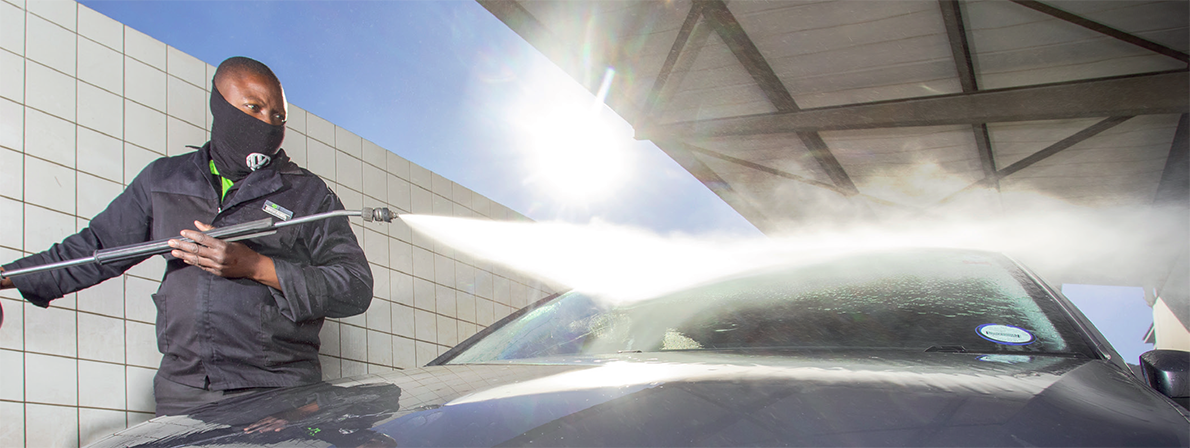
Our biggest impact on the environment is the water used in our parts manufacturing plants and
to wash vehicles in our dealership and rental depots. Other areas of focus are electricity
consumption, given the supply concerns facing South Africa, the responsible disposal of
hazardous waste oil generated from the servicing of vehicles and equipment, and the fuel
needed to support our operating model, for example customer test drives and the delivery of
aftermarket parts. We measure our environmental performance and the effectiveness of our
projects to maximise operational efficiency against clear resource consumption targets.
2020 performance
Installed solar photovoltaic (PV) systems at an Autoworx depot and
the Hyundai parts distribution centre
(PDC), both located in Gauteng.
Hyundai's PDC now operates off the
grid around 70% of the time.
Environmental compliance
No environmental-related fines or
penalties incurred.
Carbon footprint1 (Group)
116 667 tCO2 Scope 1 and 2
emissions
(2019: 128 270)
1 625 tCO2 Scope 3 emissions
Water purchased from
municipalities (Group)
603 509 kilolitres
(2019: 611 223)
Electricity purchased (Group)
75 713 megawatt hours
(2019: 80 146)
Road fuel consumption
(Group)
19 186 337 litres
(2019: 22 250 296)
| 1 |
Scope 1 and scope 2 emissions: tonnes of carbon dioxide.
Scope 3 reported for the first time. |
- Achieved our internal targets for fuel and water consumption (10% reduction over three years
using 2018 as the base year), under the first BNP Paribas sustainability linked loan.
- The second sustainability-linked loan for £120 million (secured in January 2020) is a three-year
facility co-ordinated by BNP Paribas and Sumitomo Mitsui Banking Corporation among
others, which links preferential interest rates with pre-agreed targets to reduce water and
fuel consumption (flat range reduction relative to 2019 consumption). This loan replaces the
first BNP Paribas facility.
- Motus Commercials in the UK (one of the largest DAF truck dealers globally) successfully
completed its ISO 14001 audits, maintaining its accreditation for eight consecutive years.
- While water consumption decreased 1,3% compared to 2019, prior to business closures due to
the COVID-19 lockdown, our water usage was above our internal stretch target. Contributors
to the increase included municipal-related issues in South Africa, for example burst pipes and
estimated council meter readings, water leakages which have now been repaired, a number
of building renovations and new business sites opened in the UK and Australia.
- Decreased activity due to COVID-19 is the main reason for the 9% decrease in scopes 1 and
2 emissions, however, a number of fuel cost initiatives were implemented in many businesses
also contributing to lower fuel consumption. In addition, the use of digital platforms for remote
meetings has significantly reduced business travel, particularly to international destinations.
Looking forward
- Reduce municipal water consumption and the carbon footprint by 15% over three years to 2021 (base year: 2018).
To achieve these reductions, we will develop specific water usage strategies (more accurate reporting and the
reduction of our reliance on municipal estimates) and analyse the feasibility of solar energy plants at certain sites.
Cost containment measures to respond to COVID-19 are, however, likely to impact future solar installations in the
short term.
- Deliver refresher training on the Motus sustainability management system and the importance of accurate
reporting.
- Work to ensure that automotive policy in South Africa includes a target and stimulus package that drive increased
penetration of hybrid and alternative energy vehicles in the market.
- COVID-19 and the need to work remotely is expected to reduce our environmental footprint going forward and
may present an opportunity to reduce or use existing office space more efficiently in the short and medium term.
- Financial Services aims to design relevant products to support lower carbon vehicles and to make meaningful
contributions to "mobility as a service" through initiatives like Lifti, a ride sharing app.
- In the UK, where 50% of the vehicle parc is expected to comprise electric vehicles (EV) by 2040, we are reviewing
our charging infrastructure at our dealerships to ensure we meet OEM expectations. In addition, we will develop
in in ouri nEV policy and invest in skills development in this area.

Read more in our sustainable development reporting online: Maintain strong relationships with broader communities
and Operate in an environmentally conscious and responsible manner.