Our top risks
Our integrated risk management framework aims to ensure a consistent
(value-based) and responsible (within tolerance levels) manner of
responding to the uncertainty faced in our operating context, i.e. risks
and opportunities associated with our strategy and present in our internal
and external operating environment. Both existing and emerging risks are
addressed.
Everything we do strives to achieve harmony and efficiency in aligning our
people, processes, data, systems and infrastructure to meet our objectives
by taking responsible risks within the operating context in which we
choose to position the businesses.
Any risk taken is considered within board-approved risk appetite and
tolerance levels which are reviewed and, where necessary, updated on a
quarterly basis. Management monitors emerging risks on an ongoing basis
until they are formally assessed and incorporated into our risk profile.
Risks are classified as emerging when their extent, nature and timing are
uncertain.
Top risks and opportunities
Risk exposure
movement:

Inherent risk:

Residual risk:
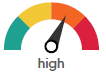
Currency risks: currency volatility has a direct
impact on the costs of imported vehicles and
parts. Unfavourable exchange rates against
the Rand affect the competitiveness and
profitability of the products, as well as service
and maintenance plans.
The South African sovereign credit rating
impacts the Rand exchange rate volatility. This
also results in changes in the Group’s equity,
potentially resulting in a positive or negative
hedging reserve position. Foreign currency
translation differences will arise on the
consolidation of foreign subsidiaries in the
reported results.
What we can control
- Actively managing the effects of currency volatility
through established hedging strategies, policies
and governance structures.
- Review funding requirements, currency hedging,
asset allocation, interest rates, funding of
acquisitions and other cash management
considerations at quarterly Asset and Liability
Committee (ALCO) meetings.
- Run currency scenarios to assess the outcomes to
adequately mitigate currency fluctuations within
tolerance levels.
- Regular management committee meetings are
held to understand foreign currency requirements
related to committed and forecasted vehicle and
parts orders, as well as the risks relating to
operations outside of South Africa.
- Embed the benefits of the integrated business model to ensure that opportunities within the
broader vehicle value chain and geographic portfolio are optimised.
- Provide service excellence and innovative customer offerings to support sustainable margins.
Risk exposure
movement:

Inherent risk:

Residual risk:
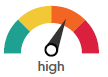
Inventory management risks: ongoing
inventory management is needed to
meet customer demand for new vehicles,
pre-owned vehicles and parts. The planning
and forecasting process allows the Group to
minimise losses from supply chain disruptions
and improve the management of ageing
new and pre-owned vehicles and parts
inventory levels.
Erratic supply and shortages of vehicles and
parts due to supply chain disruptions could
result in loss of sales and missed OEM targets,
thereby placing additional pressure on margins
and profitability.
Supplier dependency risks: we rely on our
relationships with OEMs and franchised dealers,
which are critical to our business model, and
comply with the OEM agreements. Failure to
meet OEM dealer standards will negatively
affect variable margins earned from the OEMs
and result in penalties being imposed.
The Group also relies on commercial
relationships with key suppliers to deliver
superior service to customers. The loss of any
significant supplier could impact operations
and financial performance.
What we can control
- Regularly engaging with OEMs and suppliers to
optimise inventory levels and monitor the
effectiveness of our supply chains.
- Continually assessing ways to improve efficiency
of supply chain distribution channels.
- Proactively managing inventory levels – new and
pre-owned vehicles and parts – to meet customer
demand.
- Providing a wide range of brand and model
derivatives for customers.
- Meeting OEM expectations:
- Maintaining OEM standards and requirements
on how we retail their products and high service
levels.
- Maintaining high levels of quality and safety.
- Monitoring customer satisfaction and perception
of OEM brands in each market of operation.
- Our ability to move vehicles and parts between locations to ensure continuous support for
customers and operational demand.
- Access to global markets and relationships.
- Selling high-quality products and services and providing excellent customer service.
Risk exposure
movement:

Inherent risk:

Residual risk:
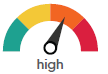
Economic risks: the impact on the global
economy given the muted recovery and
increasing infl ationary pressure post the
COVID-19 pandemic is anticipated to
continue over the short to medium term.
In South Africa, inconsistent service delivery
and poor public infrastructure is coupled
with ongoing power outages, high interest
rates and high unemployment that could
fuel social unrest.
Globally, larger economies may face a
debt crisis brought on by an inflationary
environment.
What we can control
- Focusing on cost management and capital
expenditure to extract financial and operational
efficiencies.
- Reviewing product margins, unit growth and
aggressive balance sheet management to
manage working capital investment.
- Monitor the political environment to identify
possible negative impacts and assess any risks
and opportunities.
- Participating in industry bodies and engaging with
the government on solutions to transform the
automotive industry in South Africa.
- Installing alternative power supply sources (e.g.
solar).
- Provide service excellence and innovative customer offerings to support sustainable margins
throughout the customer’s vehicle ownership journey.
- Grow digital sales channels offering an omni-channel customer experience, and diversify
selectively across sectors and geographies.
- Support NGO societal partners to uplift and support communities in need.
- Employ young people to assist with their development and preparedness for the job market.
- Embed the benefits of the integrated business model to ensure that opportunities within the
broader automotive value chain are optimised.
Risk exposure
movement:
Inherent risk:

Residual risk:
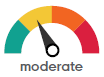
Technology risks: a legacy of decentralised IT
systems and infrastructure makes it critical to
reduce systems complexity through
consolidation wherever feasible while
enhancing the customer and user experience.
IT strategies are flexible and effective in
meeting the requirements of the business and
delivering solutions for competitive
differentiation and operational effectiveness as
the implementation of digital strategies
accelerates.
Information security risks: the global increase
of cybercrime has the potential to disrupt
services, erode customer trust and cause
financial loss.
Legislation relating to personal data requires
that this information is afforded adequate
levels of protection as instances of negligence
carry large fines.
Our ability to protect and secure our IT systems
and information is critical to managing the
threat to operational resilience and reputation.
What we can control
- Maintaining oversight and monitoring of material
IT risk profiles and projects.
- Enhancing the IT governance framework and the
cyber strategy.
- Reviewing service level agreements with external
vendors to ensure delivery and maintenance of
critical hardware and application support. Ensure
third-party oversight exceeds our standards.
- External review and audit of the general IT controls
and incorporate findings in improvement practices.
- Protecting personal information, including
engaging with our employees and partners on
information protection and cyber resilience:
- Perform ongoing cyber risk assessments to
understand the emerging risk landscape.
- Monitor adherence to minimum cybersecurity
guidelines and ensure these are continually
strengthened as vulnerabilities are identified.
- Heighten cyber-awareness through ongoing
campaigns and education initiatives.
- Deepen incident response capability to deal
with incidents and risks as they arise.
- Invest in leading technology as a key business differentiator, including ongoing digitisation of
the customer experience to respond to constantly changing customer expectations and the
need for omni-channel customer engagement.
- Ability to leverage our investment across the Group allows efficiencies in utilisation of IT resources
and achieves economies of scale.
Risk exposure
movement:
Inherent risk:
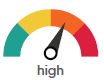
Residual risk:

Regulatory and compliance risks: the Group
is exposed to a wide range of legislation,
which impacts all our operations and
relationships with various stakeholders,
including banks, OEMs, suppliers, regulators
and the public. Non-compliance with
environmental legislation, labour-related
legislation (including skills development and
employment equity legislation), health and
safety, and product legislation could undermine
the Group’s reputation and result in penalties
and fines. Material legislative changes may
impact our business model and core market
dynamics.
 Read more in the governance report.
 Read more about the impact of recent changes in
legislation online in our ESG report.
Read more about the impact of recent changes in
legislation online in our ESG report.
What we can control
- Investing in initiatives to implement the actions
needed to ensure compliance and understand the
impact of new regulations:
- Implement the appropriate controls, training
and awareness to maintain a high level of
ethical and compliant business conduct among
our employees and partners.
- Ongoing monitoring of legislative changes.
- Conduct relevant compliance audits.
- Annual ethics self-declaration to confirm
compliance with certain key Motus policies,
including Anti-bribery and Corruption Policy,
Code of Ethics Policy and Conflict of Interest Policy.
- Specialist functions, particularly in financial
services related operations.
- Integration and close cooperation between legal
and operational functions ensures wider
commercial impact assessment of key legislative
changes.
- Ongoing engagement with industry and business
associations to advocate for more effective
policies.
- Earning the trust of our stakeholders as a good corporate citizen to invest in, do business with
and work for.
- Maintain our reputation as an organisation that effectively implements new controls quickly and
ensures compliance in an increasingly complex regulatory environment. This can provide first-mover
advantage.
Risk exposure
movement:
Inherent risk:

Residual risk:

People risk: the scarcity of qualified and skilled
managers, and specialised technical and
customer-facing skills, as the business model
becomes increasingly digital and the
technological component of most jobs grows,
challenges the availability of talent needed to
remain competitive and successfully deliver on
Motus’ strategy.
What we can control
- Providing an attractive employee value
proposition (EVP) that makes Motus attractive
to the internal-external workforce motivates
and engages employees.
- A talent management framework that:
- Identifies current and future critical skills.
- Fosters a diverse and ‘future-fit’ talent pool of
leaders and specialists.
- Ensures a healthy succession pipeline at all
levels.
- Providing tailormade programmes to build and
boost the digital dexterity of employees.
- Providing a healthy and safe working environment,
and initiatives that support employee wellbeing.
- Be an employer of choice in the automotive industry.
- Develop a diverse talent pool to gain cognitive diversity which promotes collaboration and
innovation.
- Participate in the South African YES programme to employ graduate learners, identify potential
talent and assist with reducing unemployment.
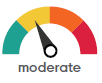
Risk exposure
movement:
Inherent risk:

Residual risk:
Transformation risk: failure to achieve
transformation targets and transform the
workforce may impact our competitiveness
and sustainability.
Read more in the people section of the social
report.
What we can control
- Driving a co-ordinated transformation programme
to meet our B-BBEE targets:
- Developing, promoting and sourcing employees
to achieve our employment equity targets.
- Extending our network into informal communities,
including non-OEM branded workshops,
majority owned black dealerships, and making
our parts and services accessible to informal
traders and technicians.
- Supporting education, healthcare, road safety
and community upliftment as part of our
commitment to broader South African growth
objectives.
- Regularly review the supply chain to identify
opportunities to increase participation of new
entrants.
- Achieve a B-BBEE scorecard rating that gives us preferred supplier and employer status,
enhancing our competitiveness and access to private sector and government business.
- Participate in the South African YES programme to provide opportunities for unemployed learners
to get work experience and assist with reducing unemployment.
Risk exposure
movement:
Inherent risk:
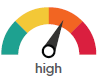
Residual risk:

Innovation risk:
the acceleration of the pace of change will require competitive
digital capabilities and innovation to sustain competitive
advantage.
Customers are increasingly product savvy and accustomed to the
convenience of the digital experience and
omni-channel engagement.
Read more in the innovation and digitisation review.
What we can control
-
Drive delivery of the innovation strategy:
-
Accelerating the implementation of new and improved ways of
doing business to reduce costs and increase efficiency.
-
Ongoing monitoring of market trends and new innovations.
-
Creating a culture of innovation and collaboration through the
mx initiative.
-
Provide service excellence and innovative customer offerings to
support sustainable margins.
-
Grow digital sales channels and diversify selectively across
sectors and geographies.
-
Invest in leading technology as a key business differentiator,
including ongoing digitisation of the customer experience to
respond to customer market expectations.
-
Develop methods of transacting that enable customers to complete
an end-to-end buying process across multiple interconnected channels.
-
Invest in technology to improve efficiencies and reduce manual and
repetitive work processes.
-
Become a data-driven organisation finding new ways to meet the
under-served mobility needs of our customers.
Risk exposure
movement:
Inherent risk:
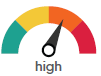
Residual risk:

Reputation risk:
failure to inculcate a culture that drives good corporate
citizenship may undermine the Group's reputation.
In addition, how stakeholder groups experience interactions with the
Group must be based on our espoused values and ethics to ensure our
continued sustainability.
Failure to take action to curb greenhouse gas (GHG) emissions and
minimise environmental impacts could tarnish our reputation,
particularly as public perceptions and expectations change.
What we can control
-
Monitoring customer satisfaction and perception of OEM brands in
each market of operation.
-
Transparent, timeous and honest engagement with key stakeholders, aligned to our values.
-
Maintain levels of quality and safety requirements of products and
services by investing in reputable brands.
-
Continue to integrate our approach and response to ESG to ensure we create sustainable value.
-
Increase support for education, healthcare and road safety
initiatives.
-
Clearly position the Group as a market leader in South Africa,
with high levels of professionalism and values.
-
Increase investment in matching customer experience in both
physical and digital channels.
-
Build on relationships with our CSI partners: road safety
awareness programmes, libraries and resource centres supporting
literacy and reading skills and healthcare through the Unjani
Clinics network.
Risk exposure
movement:
Inherent risk:

Residual risk:
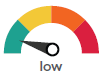
Climate-related risk: extreme weather events
can disrupt business operations, weaken
economic growth and cause damage to
vehicles, property and other assets. Higher
temperatures and lower rainfall brought about
by climate change will impact the length and
severity of droughts and, in turn, our customers
and communities. In addition, climate change
will have a direct impact on energy availability,
supply chains and the supply of food.
The transition to a low-carbon economy may
also pose risks to the Group, for example,
increasing emissions tax and introduction of
NEVs.
Read more in the environmental report
What we can control
- Operating in an environmentally conscious and
responsible manner:
- Setting robust targets for fuel, water and
electricity consumption.
- Investing in low carbon and water-saving
solutions.
- Providing appropriate and transparent disclosure
on our environmental impacts and mitigation
actions:
- Improving the measurement and reporting of
our climate-related and environmental impact.
- Understanding and planning around the medium
to
long-term NEV availability from OEMs.
- Position Motus as an organisation that considers environmental aspects in its decision-making,
and meets its environmental compliance obligations in all countries of operation.
- Work with OEMs to introduce NEVs in our range of products and services.
- Procure lower emissions vehicles for the car rental and own fleet.
- Provide battery charging infrastructure at dealerships as a new revenue stream.
Detailed information
Read more about our future focused response in our material priorities section.