


Our ESG operating context, risks and opportunities
Uneven economic recovery from the COVID-19 pandemic may compound social fractures and threaten collaboration on global challenges such as climate change, migration flows and cybercrime.
The global supply chain disruptions, rising commodity prices, tightening of energy supplies and inflation risks all present challenges to global economic and financial stability. By 2024, developing economies (excluding China) will have fallen 5,5% below their pre-pandemic expected gross domestic product (GDP) growth, while advanced economies will have surpassed it by 0,9% – widening the global income gap1. Around 51 million more people are projected to be living in extreme poverty compared to before the pandemic1. While Omicron's lower severity brings some return to normality, it is likely to still come with economic and social costs into the future.
In South Africa, the weak macroeconomic environment continues to drive poverty and high unemployment and consumer debt levels, which together with a deterioration in public services, is fuelling polarised communities. This is likely to be compounded by rising interest rates and inflationary pressure on food, fuel and electricity prices as well as political uncertainty. In the fourth quarter of the 2021 calendar year, the unemployment rate climbed to 35,3%. Youth unemployment, measuring jobseekers between 15 and 24 years old, was unchanged at a record high of 66,5%. The economic outlook for the country remains challenging. In particular, electricity shortages and unreliable electricity supply will continue to impede economic growth. Load shedding increased by 38% in 2021 with more than 2 400 gigawatt hours shed. Other pressing issues for South Africa include access to quality education and the transformation of the national healthcare system2.
The unrest that took place in July 2021 in KwaZulu-Natal and Gauteng cost the automotive industry over R3 billion3 in physical damages, lost sales orders, cancelled development projects and logistical challenges. For Aftermarket Parts, 15 stores remained closed or not operating at 100% capacity for up to seven months. Motus incurred damages totalling R35 million across 11 sites4.
South Africa's National Investment Plan 2050, launched in March 2022, aims to provide a long-term infrastructure planning framework for South Africa. The broadscale plans will strengthen longer-term growth and improve socio-economic conditions if successfully implemented. The fourth annual South Africa Investment Conference held in March 2022 netted R332 billion in pledges from investors who vowed to support the economic recovery project.
The World Economic Forum's Global Risks Perception Survey indicated that respondents felt that social cohesion erosion, livelihood crises and mental health deterioration had worsened over the past two years. They highlighted climate action failure (seen as the number one long-term threat to the world and people), extreme weather and loss of biodiversity as being the top three most severe environmental risks.
Climate change
COVID-19 brought about co-ordinated health responses and some of the largest social spending programmes implemented to protect livelihoods and the most vulnerable Climate change is an even bigger challenge for the world. The Intergovernmental Panel on Climate Change's 2021 report confirms unprecedented and in some cases irreversible climate changes in every global region, and that climate impacts are already more widespread and severe than expected5. The impacts of climate change include extreme temperatures not seen for years6, droughts, fires, floods, resource scarcity and species loss, among others, which in turn impact food and job security, with the poor being the most negatively affected.
In April 2022, large-scale flooding in KwaZulu-Natal, South Africa, left a trail of destruction in certain areas. Some of our employees were not able to come to work and others had no clean water. Parts of Nelson Mandela Bay are at risk of running out of water, potentially causing market disruption, and adversely impacting our staff living in the area and the factories of OEMs based in the area. For South Africa, the ability to mitigate widespread disaster is constrained; some parts of KwaZulu-Natal took over four weeks to resume municipal water supplies following the floods. While we were not directly impacted by the floods, Toyota had to destroy around 4 500 damaged vehicles and suspend production for four months, impacting the availability of vehicles and parts at all Toyota dealerships. Our results were impacted by approximately R24 million.
In Australia, floods in Queensland and New South Wales have disrupted business activity.
| 1 | World Economic Forum’s Global Risk Report 2022 (Edition 17). |
| 2 | Over 80% of the population depends on the overburdened public sector system, which operates a costly curative-care based model rather than focusing on disease prevention. |
| 3 | naamsa I The Automotive Business Council (July 2021 report). |
| 4 | Losses were recovered as far as possible through our insurance policies. |
| 5 | The Intergovernmental Panel on Climate Change Working Group’s report ‘Climate Change 2021: the Physical Science Basis’ released in August 2021. |
| 6 | World Economic Forum’s Global Risk Report 2022 (Edition 17). |
The greenhouse gas emissions rate rose faster in 2020 than the average over the last decade. Countries relying on carbon-intensive sectors risk losing competitive advantage through higher carbon costs, reduced resilience, failure to keep up with technological innovation and limited leverage in trade agreements1. Yet shifting away from carbon-intense industries, which currently employ millions of workers, creates the risk that skills, jobs and social cohesion may be further eroded. In addition, there are unknown risks associated with untested biotechnical and geo-engineering technologies, and lack of public support for land use transitions or new pricing schemes will create political complications that further slow action.
A number of decisions were taken at COP26 to accelerate collective action towards limiting global temperature increases to 1,5 degrees Celsius. South Africa, the UK and Australia have all committed to net zero emission targets by 2050. To achieve this, industrial production, transportation and the way people live and consume will need to change. Accelerating innovation and investments in the next 10 years is critical to making low-carbon technologies cost competitive and building green supply chains.
The adoption of plug-in electric vehicles (EVs) is expected to accelerate exponentially in developed markets. However, South Africa's unreliable power supply and the high cost of these vehicles, means adoption is likely to lag with hybrid vehicles potentially being better positioned to bridge this gap. Investment will be needed in South Africa to adapt manufacturing towards the supply of vehicles for export.
To drive transition to a lower carbon economy, governments need trust. This means they will need to first address the concerns of citizens, and set the construct to enable the private sector to invest and drive change. They will also have to assist the financial services sector and businesses to de-risk and develop blended finance structures for the green transition.
Global supply chains
The global shortage of semi-conductors (needed for technologically advanced vehicles2), has impacted vehicle production and created erratic inventory supply, further compounded by rising production, freight and logistics costs. The shortage has been brought about by the intensified worldwide demand for electronic goods during the COVID-19 pandemic. Analysts estimate that the vehicle production losses caused by the shortage could be between 6,3 million and 7,1 million vehicles for the 2021 calendar year 3. Then in 2022, the Russia-Ukraine conflict heightened supply chain pressures and caused further disruption for some suppliers. While governments may look to increase local production across sectors, a better global approach to trade is needed to build resilient supply chains that are competitive, sustainable and inclusive.
Changing customer behaviour and technological advances
Customers are demanding new types of mobility solutions, from vehicles with lower carbon emissions to less costly shared ownership models (ride-sharing, vehicle subscription and e-hailing). Deeper understanding will be required to participate in the shifts in individual mobility patterns, driving new engagement and business models.
Customer shopping preferences and ability to source information continue to evolve. This requires investment in a variety of digital offerings that meet customer needs, enhance their experiences and provide multiple channels through which to access information. A complementary physical footprint is still needed for aspects of the buying process that remain difficult to digitise. Across industries, investment is being made to provide customised solutions and experiences, and new engagement models to build deeper connections with customers.
Effective data management will be critical to delivering more personalised and customised mobility experiences. As dependency on digital systems intensifies, cybersecurity threats are growing in sophistication and aggressiveness. Attacks on large and strategic systems will carry consequences for societies and impact public trust. Technology governance and policies must create and maintain trust in technology and the opportunity that digital solutions present.
The workforce of the future
Skills requirements are changing with a strong emphasis on digital, customer-focused and human-machine interaction skills. For the automotive industry, while operational roles such as vehicle technicians, store assistants and retail managers are still key, there is also a growing need for data and software scientists. In addition, employees want flexible and collaborative ways of working, which is playing a role in their decisions on who to work for.
According to PwC, by 2030 the labour force in sub-Saharan Africa is set to reach 676 million, 20% of the world's workforce. Yet widening digital and education gaps may split the world into countries able to implement digital transformations that achieve new growth opportunities and others being held back by digital divides and stagnant job markets. Education is critical in ensuring that young people have the skills necessary to join workforces.
| 1 | World Economic Forum’s Global Risk Report 2022 (Edition 17). |
| 2 | According to the New York Times, a new vehicle can have up to 100 microchips onboard (used in components from touchscreens to transmissions). |
| 3 | naamsa I The Automotive Business Council (September 2021 report). |
ESG risks and opportunities
Climate change
Risk exposure movement:

Inherent risk:

Residual risk:
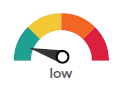
Physical risks (short term): extreme weather events can disrupt business operations, weaken economic growth and cause damage to vehicles, property and other assets. Higher temperatures and lower rainfall brought about by climate change will impact the length and severity of droughts, and in turn, our customers and communities. In addition, climate change will have a direct impact on energy availability, supply chains and the supply of food.
Transition risks (short to long term): the transition to a low‑carbon economy poses the following short-term risks:
- Access to finance that is increasingly linked to an organisation’s climate-related risks.
- Access to the capital needed to invest in long-term solutions that optimise resource consumption.
- Increasing emissions taxes.
- Foreign regulations that impact exports.
- Increasing prices for goods and services.
Over the medium to long term, climate-related risks include:
- Customer preference for products that have a lower negative impact on the environment.
- Aggressive adoption targets for plug-in EVs and the discontinuance of internal combustion engines in the European Union.
- A change in our portfolio of products (the timing dependent on country regulations).
- The impact of NEVs on workshop profitability.
Reputation risks (medium term): failure to take action to curb GHG emissions and minimise environmental impacts could tarnish our reputation, particularly as public perceptions and expectations change.
What we can control
- Operating in an environmentally conscious and
responsible manner:
- Robust targets for water, fuel and electricity consumption.
- Investing in low carbon and water-saving solutions.
- Providing appropriate and transparent disclosure on our environmental impacts and mitigation actions:
- Improving the measurement and reporting of our climate-related and environmental impact
- Understanding and planning around the medium to long‑term EV availability from OEMs.
Not fully within our control but we can play an influencing role
- Availability of automotive products and services that contribute to environmental improvement.
- National policy and the infrastructure needed in South Africa to support plug-in EVs.
Opportunities
- Position Motus as an organisation that considers environmental aspects in its decision-making, and meets its environmental compliance obligations in all countries of operation (short term).
- Procure lower emissions vehicles for our fleets (Car Rental and company vehicle fleet etc.).
- Provide battery charging infrastructure at dealerships as a new revenue stream (short term).

Detailed information

Economic and socio-political challenges
Risk exposure movement:

Inherent risk:
Residual risk:
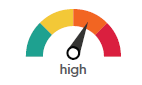
Prolonged economic stagnation: the impact on the global economy given the muted recovery and increasing inflationary pressure post the COVID-19 pandemic is anticipated to continue over the short to medium term.
In South Africa, inconsistent service delivery and poor public infrastructure is coupled with ongoing power outages, high interest rates and high unemployment that could fuel social unrest.
Globally, larger economies may face a debt crisis brought on by an inflationary environment.
What we can control
- Monitoring the political environment to identify possible negative impacts and assess any risks and opportunities.
- Participating in industry bodies and engaging with the government on solutions to transform the automotive industry in South Africa.
- Installing alternative power supply sources.
People
Risk exposure movement:
Inherent risk:
Residual risk:

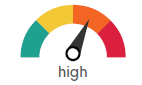
Succession and talent management: as the business model becomes increasingly digital and the technological component of most jobs grows, the scarcity of qualified, specialised (technical and customer-facing) and digitally skilled people challenges the availability of talent needed to remain competitive and successfully deliver on Motus’ strategy.
Health and wellness: COVID-19 fatigue may result in employees feeling undersupported or overwhelmed, impacting their productivity and mental health. The emergence of more infectious diseases is a global risk.
What we can control
- Providing an employee value proposition that is attractive to current and potential employees, enabling us to attract and retain motivated and engaged employees.
- A talent management framework that:
- Identifies current and future critical skills.
- Fosters a diverse and future-fit talent pool of leaders and specialists.
- Ensures a healthy succession pipeline at all levels.
- Providing tailormade programmes to build the digital dexterity of employees.
- Providing a healthy and safe working environment and initiatives that support employee wellbeing.
Not fully within our control but we can play an influencing role
- Scarcity of qualified skills.
- The slow uptake of vaccines in South Africa.
- The increasing wage bill.
- OHS within the supply chain.
Supply chain
Risk exposure movement:
Inherent risk:

Residual risk:

Supplier relationships: OEMs and our franchised dealers are critical to our business model and key suppliers enable us to deliver superior service to our customers. The termination of these contracts could impact our operations and financial performance or result in penalties. Failure to meet OEM dealer standards could affect our status as an exclusive distributor and retailer of the global brands we represent.
Product safety: failure to meet product safety standards and legislation designed to protect consumers, could undermine the Group’s reputation, and result in penalties and fines and loss of commercial licences.
What we can control
- Regularly engaging with OEMs and suppliers and monitoring the effectiveness of our supply chains.
- Meeting and maintaining OEM expectations in
terms of:
- Their standards and requirements on how we retail their products.
- High levels of quality and safety.
- Customer satisfaction.
- Providing excellent customer service.
Not fully within our control but we can play an influencing role
- Safety features of vehicles.
Transformation
Risk exposure movement:
Inherent risk:
Residual risk:

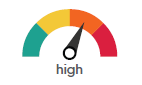
B-BBEE status of South African-based operations: failure to achieve transformation targets and transform the workforce may impact our competitiveness and sustainability.
Reputation: failure to inculcate a culture that drives good corporate citizenship may undermine the Group’s reputation.
What we can control
- Driving a co-ordinated transformation programme to meet our B-BBEE targets:
- Achieving our employment equity targets.
- Extending our network into informal communities (non‑OEM branded workshops, majority black-owned dealerships, and accessible parts and services for informal traders and technicians).
- Supporting education, healthcare, road safety and community upliftment as part of our commitment to broader South African growth objectives.
- Regularly reviewing the supply chain to identify opportunities to increase the participation of new entrants.
Not fully within our control but we can play an influencing role
- Achieving full points on the B-BBEE scorecard for preferential procurement.
Opportunities
- Be an employer of choice in the automotive industry.
- Develop a diverse talent pool to gain cognitive diversity which promotes collaboration and innovation.
- Participate in the YES4Youth Programme to employ graduate learners, identify potential talent, provide opportunities for unemployed learners and help reduce unemployment.
- A supply chain that underpins our ability to source and sell high-quality products and services.
- Achieve a B-BBEE scorecard rating that gives us preferred supplier and employer status, enhancing our competitiveness and access to private sector and government business.
- Build our relationships with our CSI and other societal partners to uplift and support communities in need and address social challenges faced in South Africa.
- Employ and develop young people to prepare them for the job market.
Detailed information
Regulatory and compliance
Risk exposure movement:
Inherent risk:
Residual risk:
New legislation impacting business: the Group is exposed to a wide range of legislation, which impacts all our operations and relationships with various stakeholders, including banks, OEMs, suppliers, regulators and the public. Non-compliance with environmental legislation, labour-related legislation (including skills development and employment equity legislation), OHS and product legislation could undermine the Group’s reputation and result in penalties and fines. Material legislative changes may impact our business model and core market dynamics.
Unethical conduct: a difficult economic climate where people are suffering economic hardship, can lead to increased incidents of fraud, corruption and misconduct, including by employees and stakeholders in our supply chain. More broadly, any negative environmental or social impact arising from the activities of our OEMs and key suppliers, could create negative sentiment for the Group.
What we can control
- Investing in initiatives to implement the actions
needed to ensure compliance and understand
the impact of new regulations:
- Appropriate controls, training and awareness (for employees and partners).
- Specialist compliance functions.
- Ongoing monitoring of legislative changes.
- Conducting relevant compliance audits.
- Close co-operation between legal and operational functions.
- Ongoing engagement with industry and business associations to advocate for more effective policies.
- Annual ethics self-declaration.
Not fully within our control but we can play an influencing role
- Regulatory developments.
- Consumer awareness of regulatory changes.
Technology
Risk exposure movement:
Inherent risk:
Residual risk:
Information security: the global increase of cybercrime has the potential to disrupt services, erode customer trust and cause financial loss. As the digitisation of the automotive industry increases in pace, cybercrime trends are expected to intensify. Digital inequality may be an emerging risk over the next two years.
Legislation relating to personal data requires that this information is afforded adequate levels of protection as instances of negligence carry large fines.
What we can control
- Enhancing the IT governance framework and our cyber strategy.
- Protecting personal information, including engaging with our employees and partners on information protection and cyber resilience:
- Ongoing cyber risk assessments
- Adherence to minimum cybersecurity guidelines.
- Heightened cyber-awareness.
- Robust incident response capability to deal with incidents and risks as they arise.
Opportunities
- Earn the trust of our stakeholders as a good corporate citizen to invest in, do business with and work for.
- Maintain our reputation as an organisation that effectively implements new controls quickly and ensures compliance in an increasingly complex regulatory environment. This can provide first mover advantage.
- Develop legally compliant methods of transacting that enable customers to complete an end-to-end buying process across multiple interconnected channels.