


Board oversight
The board is responsible for ensuring that good governance practices and principles are applied to maintain high standards of accountability, transparency and integrity in the way Motus manages its sustainability-related risks, opportunities and impacts. Our governance structures ensure that our environmental and social impacts are identified and understood, and that negative impacts are responsibly mitigated and positive impacts are leveraged to drive value for our stakeholders.
Our board
Motus is led by a diverse board of directors, the majority of whom are independent. The board has extensive industry and operating context knowledge, expertise and experience. It leads with integrity, setting the tone for ethical leadership, sustainability, stakeholder inclusivity and high standards of corporate governance throughout the Group. The board is supported by a highly experienced management team with years of collective experience and expertise, extensive industry knowledge of regional and global markets, and a proven track record.
During the year, Fundiswa Roji joined the Motus board. She is a CA(SA) with extensive professional experience gained at Imperial Holdings Limited, Kagiso Trust Investments and Kagiso Tiso Holdings.
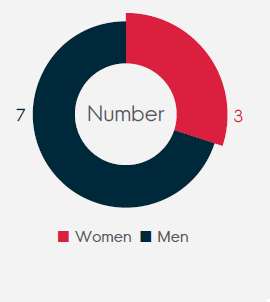
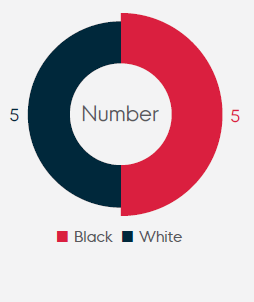
The board's diversity in terms of backgrounds, skills and experience is governed by our broad diversity policy on gender and race.
All board committees have approved terms of reference, which clearly set out their duties and responsibilities.
Each committee is chaired by an independent non-executive director. The evaluation of the board's performance and that of its sub-committees, its chairman and its individual members is conducted every two years to support continued improvement in performance and effectiveness. In addition, meetings are held between the Chairman and individual board members to discuss the results of the assessments and to identify concerns and areas for improvement. No instances of non-compliance with terms of reference were noted in 2022 and the board and its committees were found to be adequately performing their duties. Committee packs contain the correct level of information to allow for informed decision-making.
Board members have a broad range of experience given their other external board positions where ESG strategies may be more mature than that of the Group. Where additional expertise is required, external specialists are invited to provide board education, for example, two ESG-dedicated sessions were held in 2022 to bring the board up to date with changing ESG stakeholder expectations and reporting requirements.
Board composition
Independence

Age

Gender
Race
Social, Ethics and Sustainability Committee
In addition to its statutory duties, the SES Committee guides and oversees our sustainability-related strategies and their implementation. In the 2021 board evaluation, conducted by an independent external consultant, ESG was identified as an important area of future focus. In response, the SES Committee was reconstituted in September 2021, now comprising four members with two being independent non-executive directors, a non-executive director and the Group CEO. The Group CFO, CEO of Mobility Solutions, the Executive of Corporate Affairs, Risk and Sustainability, the Chief People Officer (CPO) and the Chief Specialist of Governance and Compliance attend the SES Committee meetings as invitees.
 SES Committee responsibilities.
The committee's mandate and agenda have been streamlined to ensure appropriate focus on ESG matters. The meeting agenda now provides more focused reporting on the Group's ESG performance and compliance with various ESG-related regulations.
The committee's agenda covers:
- Our standing in terms of the 10 United Nations Global Compact principles, the Organization for Economic Cooperation and Development recommendations regarding corruption, the International Labour Organization Protocol on decent work and working conditions and, in South Africa, the Employment Equity Act and Broad-based Black Economic Empowerment Act.
- Environmental matters: climate change risk, our environmental strategy, our investment in green projects, and OEM plans to manufacture and supply new energy vehicles (NEVs).
- Social matters: human capital management, including the promotion of diversity, equity and inclusion; our employee relationships; training and development; health, safety and employee wellbeing; our performance against the B-BBEE scorecard; and our corporate social responsibility; as well as broader commercial and economic dynamics such as innovation, brand and reputation management that may impact our sustainability.
- Governance matters: ethics, compliance and regulatory matters, Ombudsman metrics, and our IT strategy, including our investment in technology, cost containment, enabling new governance processes, proper oversight of business segment IT functions, adherence to governance policies and frameworks, maintaining the correct level of cybersecurity, improving the performance and functionality of apps, and upgrading out-of-date platforms.
As part of the Group's strategic planning, the SES Committee ensures that budgets and resources are in place to meet our key ESG objectives, including for training and development, information security, B-BBEE initiatives, corporate social investment (CSI) spend and environmental improvement projects. The SES Committee met four times during the year.
Key deliberations, discussions and decisions made in 2022
- The committee oversaw the management of the whistle-blowing hotline and the disciplinary actions taken where misconduct had been verified.
- The committee reviewed:
- The Group's training spend and matters relating to employee relations and employee wellness.
- Our plans in South Africa to improve our B-BBEE rating, including preferential procurement, enterprise and supplier development and skills development initiatives.
- Progress against the Group's three-year environmental targets.
- The SES Committee requested the following actions:
- An investigation into the root cause of the increase in electricity and water consumption in Aftermarket Parts: completed.
- A presentation on branding and innovation: completed.
- Enhanced reporting on the Ombudsman metrics, including the nature and trends of cases: completed.
- Deeper insight on the waste management practices applied at brand and dealership level: completed.
- Information on how the Group manages dishonesty: completed.
- An update on the South African Revenue Service Bill and the impact on the Group: drafted.
- The committee kept abreast of vaccination rates in various operations, and the Group's efforts to engage with employees on the importance of vaccinating against the COVID-19 virus.
- The committee was pleased with the progress made and the improved level of reporting for compliance-related matters, and the compliance results achieved within the South African dealerships. It suggested that similar compliance reporting should be required of the UK and Australian operations; this is now in place.
- Concerns raised by the SES Committee during the year included:
- Whether a plan is in place should OEMs introduce new energy vehicles before the South African market is ready.
- The increasing number of mental wellness issues.
- The committee was kept updated on the Companies Amendment Bill, 2021, published in October 2021 for public comment. Among the Bill's proposed changes are requirements relating to the composition of social and ethics committees, minimum qualifications for committee members, the process to fill vacancies on the committee, and the presentation and approval of the social and ethics committee report at the annual general meeting or other meetings of shareholders. No date has been provided for when these changes will come into effect.
Objectives for 2023
- Oversee the implementation of the recommendations arising out of the 2022 externally facilitated maturity assessment of the Group's ESG framework ( see
 Management of sustainability matters).
 - Oversee the development of a net zero plan for the Group.
- Ensure that increased focus is placed on the Group's ethical framework, procurement practices and gender diversity.
Audit and Risk Committee
The Audit and Risk Committee (ARC) is responsible for ensuring that Motus has a robust and effective risk management framework, that integrates ESG-related risks, and is embedded throughout the Group. Technology and information are critical enablers of the Group's innovation strategy; however, as we advance this strategy our efforts to protect our systems and information must be continually assessed and improved to remain robust. ARC receives a quarterly IT report which covers IT governance, IT and cyber risks, incidents and projects, as well as IT-related audit findings. The report is also submitted to the SES Committee meetings for sustainability-related concerns. In addition, ARC assists the board in overseeing the quality and integrity of our sustainability reporting.
The committee comprises three independent non-executive directors, and the Executive of Corporate Affairs, Risk and Sustainability attends meetings as an invitee. ARC met five times during the year. Standing agenda items relating to ESG matters include Motus' top business risks (including climate change risk); fraud, theft and litigation; compliance and emerging legislation; taxation and IT.
The committee also considers detailed reports from the FRRCs, established for each business segment in South Africa and for the operations in the UK, Australia and Rest of Africa.
Key ESG-related deliberations, discussions and decisions made in 2022
- The committee reviewed the impact of ESG-related risks on the Group’s risk profile.
- The committee oversaw:
- The adequacy of provisions relating to legal or Ombudsman cases.
- The funding for non-insurable climate-related events.
- The maturity of the Group’s internal control environment and our ability to prevent and detect fraud due to an increasing risk of fraud brought about by socio-economic deterioration.
- New and proposed legislation with material impact to the business.
Remuneration Committee
The Remuneration Committee (Remco) advises and guides the board on director remuneration, sets and implements the remuneration policy to ensure fair and responsible remuneration, and approves remuneration packages and the criteria for executive short-term and long-term incentives benchmarked against an appropriate peer group. The committee comprises three non-executive directors, two being independent. The Group CEO and CFO attend Remco meetings by invitation and assist the committee in its deliberations except when their own remuneration and performance are discussed. The committee met four times in 2022.
The short-term incentives (STIs) criteria for the Group CEO, Group CFO, executives and prescribed officers covers ESG aspects tailored to their roles.
| STI criteria for 2023 | Group CEO and CFO |
Executive director |
Prescribed officers |
Company Secretary |
|
 |
Achieve fuel, electricity and water targets |  |
|
|
|
| Invest in projects such as solar panels, electricity-saving equipment and water recycling in all new and refurbished buildings | |
|
|
|
|
 |
Achieve employment equity targets for top, senior and middle management | |
|||
| Achieve employment equity targets for senior, middle and junior management | |
|
|
||
| Impactful CSI projects in communities | |
|
|
|
|
 |
Implement all the legislation changes impacting the business | |
|
|
|
| Prepare the business for new legislation | |
||||
Maximum STI as a percentage of total guaranteed package (TGP) |
25% | 20% | 25% | 16% | |
Key ESG-related deliberations, discussions and decisions in 2022
- The committee reviewed the Group’s remuneration structure and deliberated the minimum performance targets at which annual STIs become payable, including those related to ESG matters, and assessed performance against these targets to inform executive award.
ESG-related awards for 2022
| Designation | Maximum STI as % of TGP |
Awarded | Notes |
| Group CEO and CFO | 25% | 18% | E: achieved fuel and electricity targets and marginal underachievement of the water usage target. Invested in projects such as solar panels, electricity-saving equipment and water recycling in all new and refurbished buildings. S: achieved employment equity targets for top management and marginal underachievement in senior and middle management. G: implemented all the required legislation changes impacting the business. |
|---|---|---|---|
| Executive director | 20% | 15% | E: achieved fuel and electricity targets and marginal underachievement of the water usage target. Invested in projects such as solar panels, electricity-saving equipment and water recycling in all new and refurbished buildings. S: achieved employment equity targets for middle and junior management and marginal underachievement in senior management. G: implemented all the required legislation changes impacting the business and prepared the business for new legislation. |
| CEO of Retail and Rental South Africa1 | 25% | 18% | E: achieved fuel and electricity targets and marginal under-achievement of the water usage target. Invested in projects such as solar panels, electricity-saving equipment and water recycling in all new and refurbished buildings. |
| CEO of Hyundai South Africa1 | 25% | 24% |
S: The CEO of Retail and Rental achieved employment equity targets for senior and junior management with marginal underachievement for middle management. The CEO of Hyundai achieved employment equity targets for senior, middle and junior management. G: implemented all the required legislation changes impacting the business. |
| Company Secretary | 16% | 12% | E: achieved fuel and electricity targets and marginal underachievement of the water usage target. Invested in projects such as solar panels, electricity-saving equipment and water recycling in all new and refurbished buildings. S: achieved employment equity targets for top management and marginal underachievement in senior and middle management. G: implemented all the required legislation changes impacting the business. |
| 1 | Prescribed officers. |