


Reducing our water consumption
The import, retail and rental businesses are the largest consumers of water in the Group. Finding ways to use water efficiently and lower our reliance on municipal water sources, reduces our operational costs and ensures business continuity even when water restrictions are in place or our operations face drought conditions.
- Poor municipal and national infrastructure in South Africa, resulting in water supply interruptions, burst pipes and water leaks, and inconsistent water supply in the Rest of Africa.
What we are doing
Benchmarking
We use certain sites as benchmarks to compare water consumption across our building footprint based on size, business activity and similar impacts on the environment. This is used to identify drivers of water consumption and opportunities to reduce our demand on municipal water, and to understand when we deviate from targets.
Water meters
In South Africa, independent smart water meters are installed in some dealerships, particularly those sites with rainwater harvesting systems.
Water harvesting and wastewater recycling systems
Water harvesting and wastewater recycling systems are implemented in the wash bays of some dealerships (South Africa and Australia) and Car Rental branches. Boreholes serve as alternative sources of water at certain dealerships (South Africa and the Rest of Africa) and Car Rental branches.
Motus Water Awareness pledge
In South Africa, the Motus Water Awareness pledge encourages employees to conserve water, report water wastage and leaks, and educate others on using water sparingly.
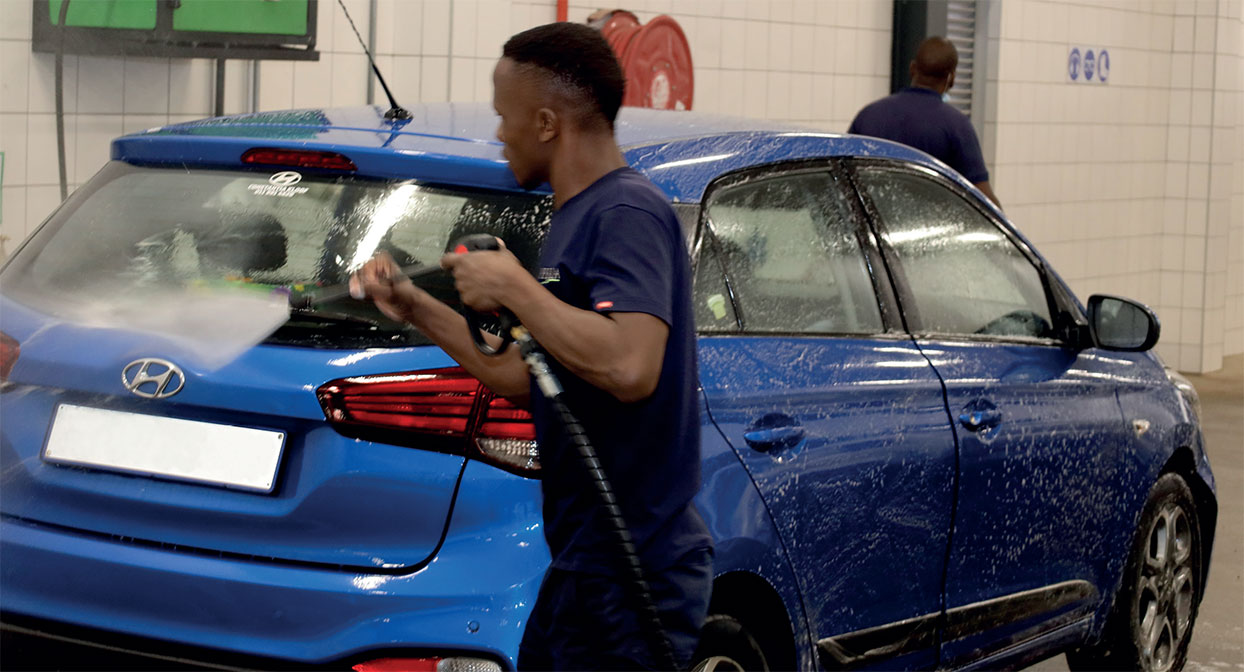

The eWasha water recycling system installed at some Retail and Rental wash bays uses recycled greywater to wash vehicles and runs on less than 10% of municipal water. Around 80% of water used in wash bays is recovered through the system.
2022 performance and key objectives
Group
- We set a new internal stretch target to reduce water consumption by 9% over three years to 2024 (
 see environment report overview).
 - We missed our year one (2022) water consumption target by 9,8%. Across the Group, water consumption increased 6,9% compared to 2021 with South Africa increasing 7,6%. These increases are mostly due to a return to normal trading activity, changes in uses of certain facilities and increased vehicle fleets following the lower levels of activity during the past two years of the COVID-19 pandemic. Our water intensity ratio marginally increased despite year-on-year revenue increasing 5,5%.
Water purchased from municipalities

Water intensity ratio
Water consumed from alternative sources
| 1 | Reported for the first time. We are still working to ensure more robust metrics for water consumed from alternative sources, particularly consistent reporting on water usage from harvested rainwater. |
South Africa
- Our new multi-franchise dealership in Menlyn (Pretoria), is fitted with seven 10 000 litre EcoWash tanks (three used in the wash bay and the remaining four used to harvest rainwater). The multi-franchise's wash bay retains 80% of the water used in a wash cycle.
- Kia's greening of its PDC includes smaller initiatives such as waterless flush toilets and dry climate vegetation that requires less water. Low flush toilets potentially save up to 80 000 litres of water per toilet.
- Retail and Rental operates 215 JoJo tanks at 59 sites and uses the harvested rainwater to wash vehicles. At Auto Pedigree alone, at least 1 500 vehicles are washed at our reconditioning centres and auctions every month using harvested rainwater. Our most recent installation was at the Toyota dealership in Bedfordview (Gauteng). 53 of the business segment's sites have water recycling plants, and one site operates off borehole water.
Regions
- In Australia, we are installing water recycling solutions when upgrading or building a new dealership.
Objectives
- South Africa: improve our reporting of water consumed from alternative sources and recycled water.
- South Africa: roll out a pilot project, where financially feasible, to subsidise water harvesting and recycling projects at the 20 wash bays we outsource to our enterprise and supplier development beneficiaries who operate at these premises free of charge (no rent and no utility costs).
- South Africa: Kia will expand the roll out of low-flush toilets to high-traffic dealerships and its head offices.
- South Africa: Mobility Solutions will instal tap flow and flush restrictors in bathrooms in 2023 to reduce water consumption by 15%. The business segment continues to investigate the feasibility of installing a rainwater harvesting system.